Imagine deploying an AI system your team spent months building, confident in its performance, accuracy, and innovation, only to discover after launch that it unintentionally creates unequal experiences for some users.
This is the hidden risk of modern AI.
AI systems are already influencing real decisions that affect people every day, from access to services and resources to safety, mobility, and opportunity. Yet demographic bias often remains invisible during development. Models may meet performance benchmarks, pass internal reviews, and still behave unevenly once exposed to real-world users and conditions.
When this happens, the consequences go beyond technical issues. Organizations can face regulatory scrutiny, reputational damage, loss of user trust, and real-world harm to the people their systems are meant to serve.
The challenge is not intent. Most teams are not trying to build biased systems. The challenge is that bias cannot be assumed away, it must be tested.
In this article, we’ll break down what demographic bias in AI really looks like, why it’s not just a data problem, and how structured, independent testing helps teams identify and address bias before deployment. You’ll learn how demographic bias is measured in practice, why industry expectations are rising, and why independent validation is becoming a critical part of responsible AI development.
Quick Links:
- What Demographic Bias Actually Is
- Why Bias Isn’t Just a Data Problem. It’s a Testing Problem
- How Demographic Bias Is Measured (Practical Metrics)
- A Structured, Independent Approach to Demographic Bias Testing
- Industry Pressures: Why This Matters Now
- Why Independent Validation Matters
What Demographic Bias Actually Is
Demographic bias occurs when an AI system performs unevenly across different groups of people. In practice, this means the system may work well for some users while producing less accurate, less reliable, or even harmful outcomes for others.
Bias can show up across a range of demographic dimensions, including age, skin tone, gender, and combinations of these factors. These disparities are often unintentional, but their impact is very real.
For example, vision-based systems have been shown to misidentify individuals with darker skin tones at higher rates than others, a challenge that has been widely documented in biometric and computer vision research.
Behavioral monitoring or decision-support tools may disproportionately flag certain demographic groups, even when underlying behaviors are similar. In other cases, AI-driven decisions can quietly produce unequal outcomes that go unnoticed until users are affected.
The challenge is that demographic bias is rarely obvious during development. Systems may pass internal checks, meet performance benchmarks, and still behave unevenly once deployed in real-world environments.
Why Bias Isn’t Just a Data Problem. It’s a Testing Problem
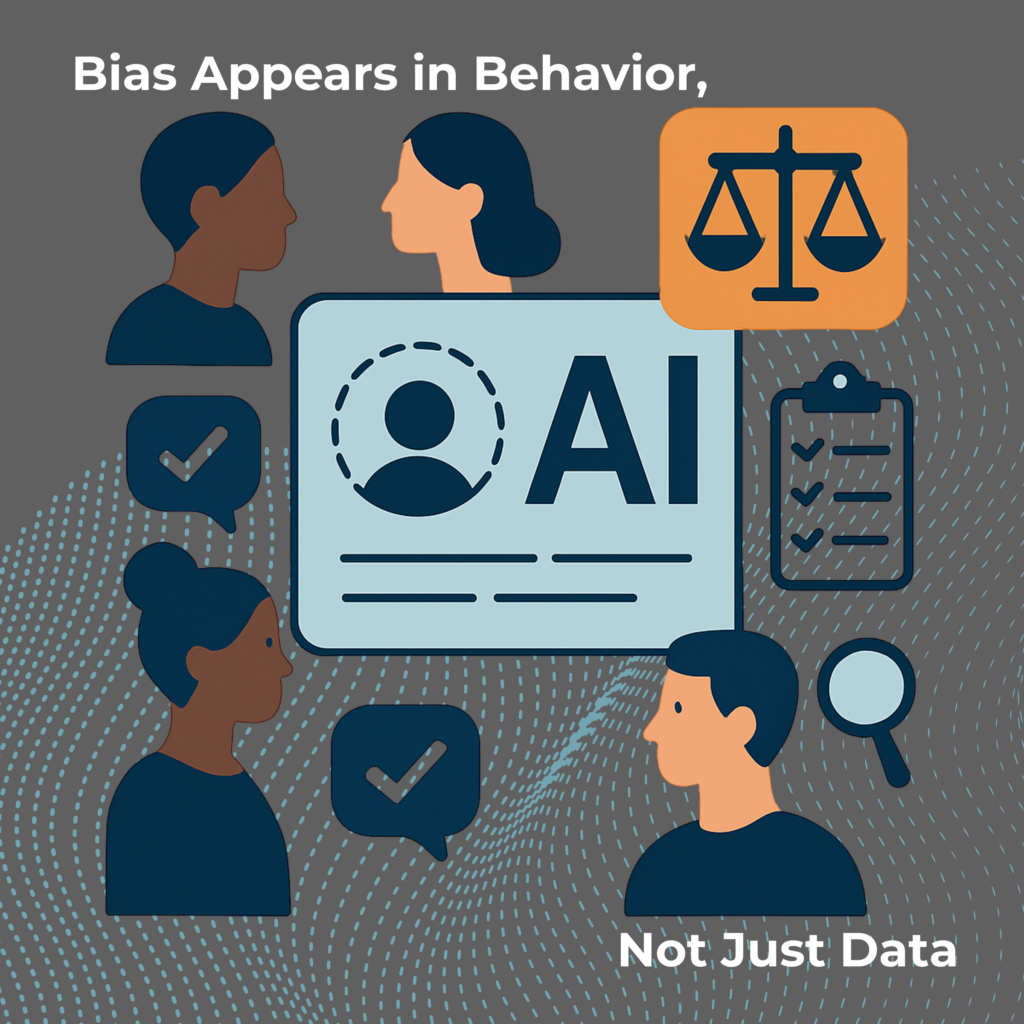
Many conversations about AI bias stop at training data. While biased or incomplete data can certainly contribute to unequal outcomes, data reviews alone are not enough to uncover how a system behaves once it is in use.
AI systems evolve in production. Models encounter new inputs, edge cases, and usage patterns that were not present during training. Over time, performance can drift, interactions between features can introduce unexpected behavior, and real-world conditions can expose gaps that static data analysis never reveals.
This is where testing becomes essential.
Demographic bias is revealed through how a system performs across users, not through assumptions about how it should perform. Without structured testing, teams may miss how edge cases affect specific populations, how updates change outcomes, or how combined demographic factors influence results.
Effective bias evaluation requires ongoing testing that treats fairness and consistency as measurable qualities. This approach aligns with emerging guidance such as the NIST AI Risk Management Framework, which emphasizes continuous evaluation and risk mitigation throughout an AI system’s lifecycle. That means bias must be tested, measured, validated, and re-tested over time, just like performance, reliability, or accessibility.
How Demographic Bias Is Measured (Practical Metrics)
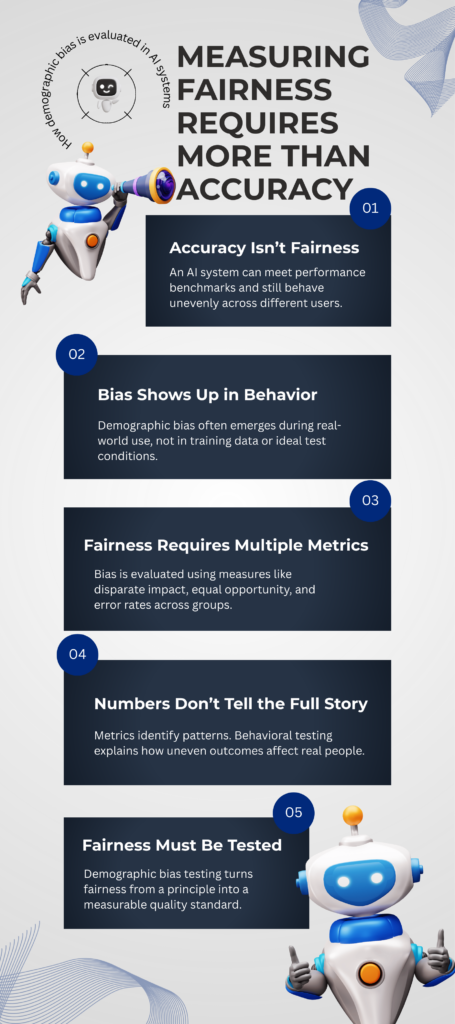
Measuring demographic bias starts with comparing how an AI system performs across different groups. This is often done through fairness audits that examine outcomes, error rates, and decision patterns for specific populations.
Common measurement approaches include evaluating disparate impact, which looks at whether outcomes disproportionately affect certain groups, and equal opportunity metrics, which assess whether different groups have comparable chances of receiving correct or favorable results. The OECD also outlines fairness and accountability considerations for AI systems used across global markets.
Testing may involve segmenting system outputs by demographic attributes and analyzing performance differences between groups. In more advanced scenarios, testers evaluate intersectional combinations, such as how age and gender together influence outcomes, rather than treating each attribute in isolation.
While metrics are important, they are only part of the picture. Numbers alone do not explain why bias occurs or how it will affect users in real-world scenarios. Measurement must be paired with context, scenario-based testing, and human review to understand the practical implications of uneven system behavior.
A Structured, Independent Approach to Demographic Bias Testing
Demographic bias testing is most effective when approached as a formal quality assurance discipline rather than an informal review.
A structured approach begins with evaluating how an AI system behaves across diverse demographic groups under realistic conditions. This includes testing expected workflows as well as adversarial or edge-case scenarios designed to expose weaknesses.
Independent, lab-based validation plays a critical role in this process. External testing helps remove internal blind spots and provides objective insight into system behavior. Repeatable methodologies, controlled test environments, and documented procedures ensure findings are consistent and defensible.
Clear reporting is equally important. Teams need to understand not only whether bias exists, but where it appears, how severe it is, and what impact it may have on users. This level of clarity supports informed decisions before systems reach the public.
Approached this way, demographic bias testing aligns naturally with other established QA practices, such as performance testing, accessibility testing, and biometric validation. iBeta already applies these principles across independent software QA services, accessibility testing, and biometric system validation.
Industry Pressures: Why This Matters Now
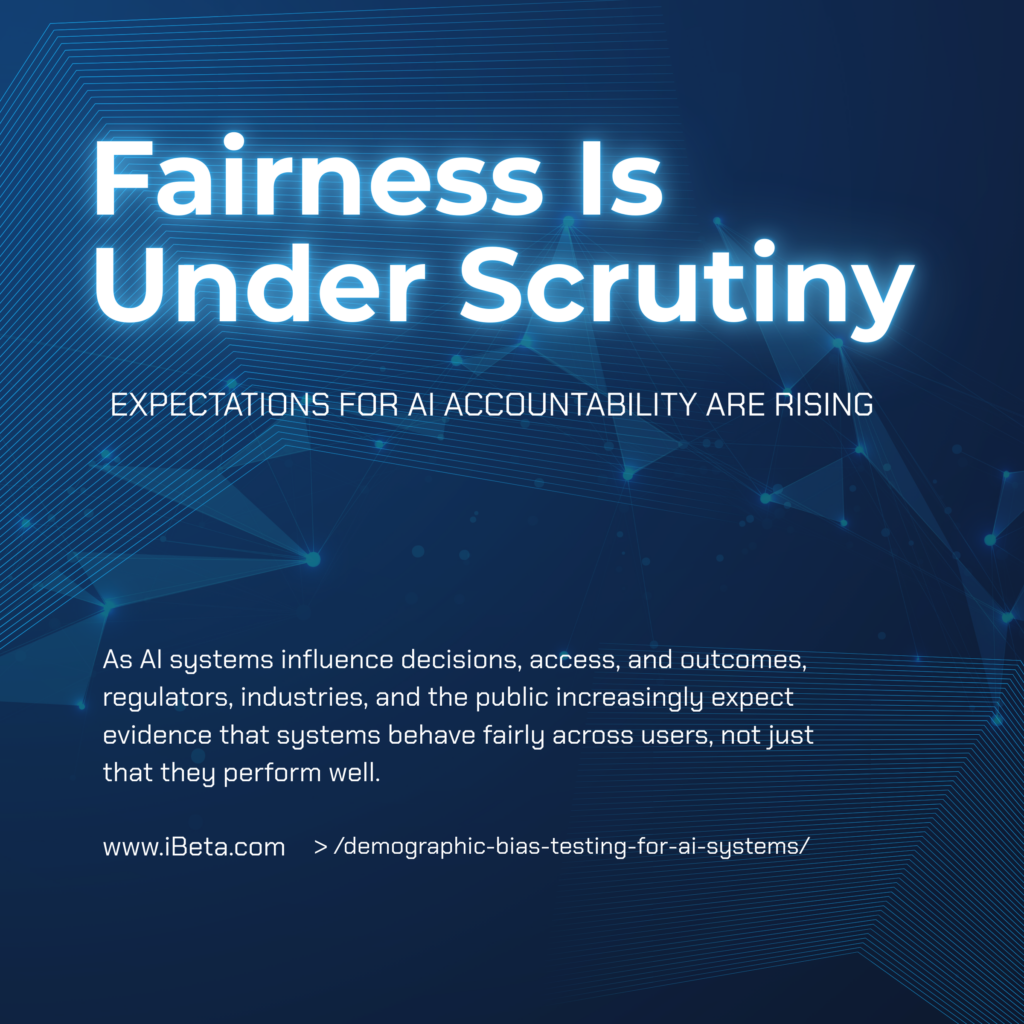
As AI systems become more deeply embedded in products and services, scrutiny around fairness and accountability is increasing.
Regulators, industry groups, and the public are paying closer attention to how automated systems affect people. Organizations face growing legal exposure when biased outcomes lead to discrimination or harm. At the same time, brand trust can erode quickly when users discover that an AI system treats them unfairly.
These pressures are especially pronounced in regulated and high-impact industries. In healthcare, biased systems can influence patient outcomes. In financial services, unequal decisions can affect access to credit or resources. In automotive, driver monitoring systems must work consistently for all users. Employment and surveillance technologies carry similar risks.
In this environment, demonstrating that AI systems have been tested for demographic bias is becoming an expectation rather than a differentiator.
Why Independent Validation Matters

Testing for demographic bias is most effective when it is conducted independently.
Internal teams often test against known scenarios and familiar data. While valuable, this approach can leave gaps, particularly when demographic diversity at scale is difficult to replicate internally. Self-testing may also introduce unconscious bias into evaluation and interpretation.
Independent labs provide objectivity, repeatability, and credibility. As an independent software testing lab with decades of experience validating complex systems, iBeta applies the same structured QA discipline to emerging AI technologies. They bring structured methodologies, external perspective, and documented processes that support transparency and accountability. Independent validation strengthens confidence not only within development teams, but also with regulators, partners, and users.
For organizations deploying AI systems that affect people, independent demographic bias testing helps ensure systems behave consistently, fairly, and as intended before they are released into the world.
From Awareness to Action
Bias can exist even in well-intentioned AI systems. As models grow more complex and are deployed at scale, assumptions about fairness are no longer enough to protect users, organizations, or brands.
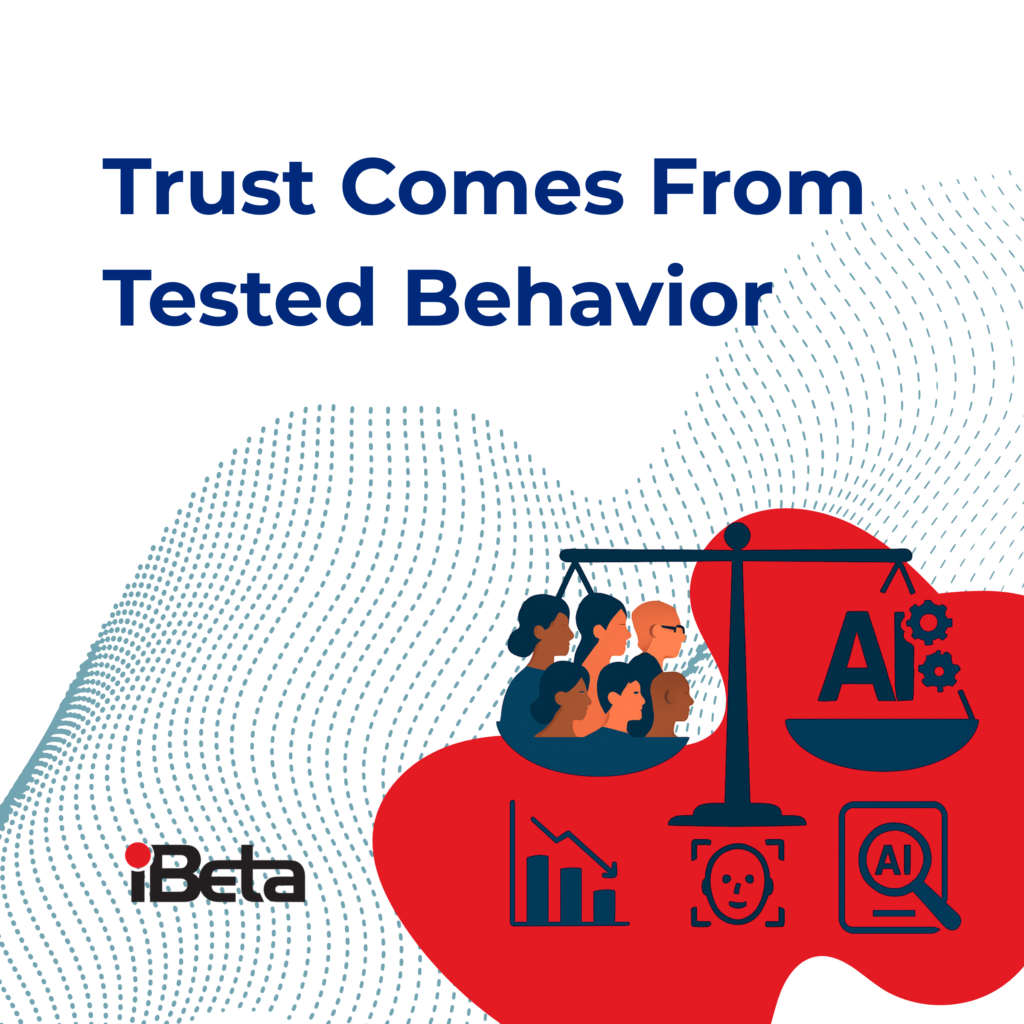
Testing brings clarity. Structured demographic bias testing helps teams understand how their AI systems behave across real people, real scenarios, and real conditions before those systems are relied on in the world.
Independent validation adds assurance. It provides objective insight, defensible documentation, and the confidence that decisions are based on evidence rather than expectation.
If your AI system impacts people, demographic bias testing shouldn’t be an afterthought. It should be part of how you validate quality, build trust, and move forward with confidence before deployment.